
Hollandazed: Thoughts, Ideas, and Miscellany — game design
THOUGHTS ON MAKING GAMES EASIER TO LEARN (by Tom Russell)
This Guilty Land was a difficult and challenging project for a wide variety of reasons. Perhaps the most obvious is that I had to immerse myself in a subject that was depressing and enraging; it often left me exhausted. I acutely felt an overwhelming onus to treat that subject with sensitivity, to get it right; there were so many ways to get it wrong or handle it badly. Beyond that, there was an additional responsibility to clearly and effectively communicate what the game was and what it was not, and how I was handling such a fraught subject. We had...
FROM THE ARCHIVES: ARTY (by Tom Russell)
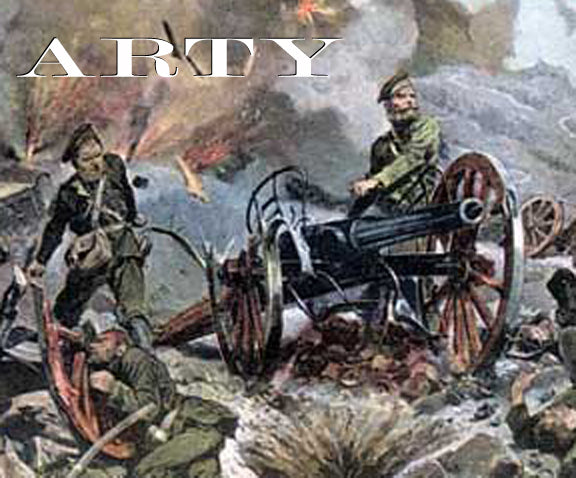
It's January of 2012, and I've just found a publisher for what would be my first published game, Blood on the Alma. The publisher is very impressed with the design. He's excited; I'm excited; Mary's excited; everyone's excited, except perhaps our cats, who react with typical indifference. There's one hitch, though: the game has too many counters. Including all the variant scenario counters and status markers, there's 210 of them, and to fit in the magazine, I need to get it down to 120. Many of these are step counters - the way the game works is that each unit...
FROM THE ARCHIVES: TIME DISTORTION IN WARGAMES (by Tom Russell)
The scale of my Shields & Swords II titles has always been somewhat fungible. Hexes don't represent a specific, consistent distance from one title to another. The units do not represent a set number of men (especially as, for some battles, nailing this down with any certainty is next to impossible, given the exaggerations common in the source material). And each turn does not represent a given, defined period of time. There are some folks for whom this kind of thing is a supreme abrogation of a wargame designer's solemn duty to ensure the unity of, and historical accuracy within,...
FROM THE ARCHIVES: ON THE CURIOUS ORIGINS OF TABLE BATTLES (by Tom Russell)
While Table Battles is a direct descendent of my earlier game Christmas at White Mountain, its existence can be better explained in the context of two apparently unrelated games: Richard Berg's multiplayer game Dynasty, and my two-player politics game Optimates et Populares. When we were publishing Richard Berg's Dynasty, we needed to get quite a lot of wood bits. We needed large cubes for armies and little cubes to demarcate control, black cubes for warlords, and wooden discs for home provinces and the Emperor's winter palace. And on top of all that, we also needed some long gray rectangular wood...
FROM THE ARCHIVES: ON THE SMALLNESS OF TABLES (by Tom Russell)
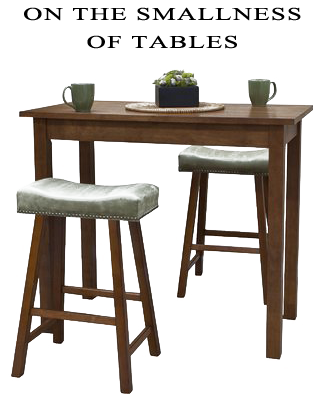
Many of the games we publish have a "small footprint". Partially this is because my own designs tend toward being compact, the result of working habits I developed over the course of a dozen-or-so games designed for magazines and ziplocks. I try to get as much game as possible out of as few components as possible. The venerable Bruce Geryk once said of The Grunwald Swords that it "punches above its weight", and that's a rather nice bit that I'm eager to use in our advertising copy. So for a long time, I've designed reasonably compact games, though of late...